
Your product is built and now you need users. The fastest option is paid ads, and for a while it works: you switch on a budget, signups appear, and the dashboard looks healthy. Then you pause spending and everything stops.
That’s the trap most early-stage SaaS teams fall into. Paid acquisition rents attention. SEO builds an asset. A comparison page that ranks in month nine is still bringing in trials in month thirty, and the marginal cost of that traffic is zero.
For Nigerian SaaS founders there’s an extra wrinkle: your ad spend is often in dollars while a good chunk of your revenue is in naira. That makes CAC volatile in a way it isn’t for competitors billing in the same currency they advertise in. Organic search doesn’t have that problem.
Why SEO Works Particularly Well for SaaS
SaaS has three characteristics that suit search better than most business models.
People search for solutions before they search for you. Nobody wakes up wanting your product name. They search “how to send invoices to international clients” or “alternative to X”. If you’re the answer to that question, you’ve met the buyer at the moment they’re actually looking.
Your customers research online by default. A software buyer will compare four options, read reviews, check pricing pages and skim a G2 thread before they book a demo. Every one of those steps is a page you could own.
The revenue is recurring. One ranking page that brings in ten subscriptions a month keeps doing it. On a subscription model, the lifetime value of organic traffic compounds twice over.
The catch is that SEO takes months to show results, which sits badly against a runway. That’s an argument for starting on day one, not for skipping it.
Building a SaaS SEO Strategy
1. Keyword Research Mapped to the Funnel
Most SaaS keyword research fails because it treats all keywords as equally valuable. They aren’t. Sort them by where the searcher is:
- Bottom of funnel: “[competitor] alternative”, “[category] pricing”, “best [category] software Nigeria”. Low volume, high intent, these convert. Build these pages first.
- Middle of funnel: “how to choose [category] software”, comparison and evaluation terms. These capture people actively shopping.
- Top of funnel: broad problem-space questions. High volume, slow to convert, useful for authority and email capture. Build these last.
The common mistake is starting at the top because the volume numbers look impressive. A page ranking for a 50-searches-a-month term with buying intent is worth more than one ranking for a 5,000-searches-a-month term nobody buys from. Our post on money pages in SEO covers how to identify the ones that actually pay.
On placement: put your primary term in the title, the H1, the first hundred words and the URL, then write naturally. Supporting terms matter too, because they’re how search engines understand the full scope of a page rather than just its headline.
2. Competitive Analysis

Your competitors have already paid for the keyword research. Look at what’s actually driving their organic traffic rather than guessing.
Ahrefs and Semrush are the standard tools here, though both are priced in dollars and get expensive fast. If you’re bootstrapping, our roundup of free keyword research tools covers workable alternatives, and Google Search Console gives you your own data for nothing.
What you’re looking for: pages of theirs that rank well and that you could cover better, and gaps where nobody has written a decent answer yet. The second category is where a small team can win, because incumbents rarely bother with the specific, unglamorous queries.
3. Run Your Content on a Real CMS
Plenty of SaaS teams build their marketing site into the product codebase, which means every blog post becomes a pull request. Content then stops, because shipping a post requires a developer.
Running your blog and marketing pages on WordPress or a comparable CMS separates content velocity from engineering velocity. Marketing publishes without waiting. You also inherit a mature ecosystem for SEO fields, schema, redirects and analytics rather than rebuilding all of it.
The practical benefits:
- Non-technical staff can publish and edit
- Built-in handling of meta titles, descriptions, canonicals and sitemaps
- Scheduling and editorial workflow
- Straightforward integration with email and analytics tools
- Far cheaper than building the same thing in-house
Keep it on a subdirectory (yoursite.com/blog) rather than a subdomain where you can. Subdirectories consolidate authority into the main domain.
4. Create Content That Answers Real Questions

The bar has moved. Generic articles that restate what everyone already published don’t rank any more, and increasingly they don’t get read either.
What does work for SaaS: content that draws on something only you have. Your product data, your customers’ actual problems, screenshots of the thing working, a workflow you’ve watched a hundred users struggle with. If the article could have been written by someone who has never used your product, it probably won’t earn a link or a ranking.
Write for the reader who is trying to solve something today, not for a keyword density target. And avoid the temptation to make every post a pitch. A post that genuinely solves a problem and mentions your product once converts better than one that mentions it eleven times. Our list of content marketing mistakes to avoid covers the usual failure modes.
One 2026 addition: AI assistants now answer a large share of research queries by summarising sources. Content that’s clearly structured, factually specific and directly answers a stated question is more likely to be cited in those answers. The same clarity that helps a reader helps a model.
5. Earn Backlinks Rather Than Buying Them
Backlinks still carry weight, and buying them is still a bad idea. Paid link networks get deindexed, and the ones that don’t are usually worthless.
Realistic ways a SaaS company earns links:
- Publish original data. Aggregate anonymised usage data from your own product into a report. Journalists and bloggers cite numbers they can’t get elsewhere.
- Build a free tool. A calculator, a template, a generator relevant to your category. Tools attract links long after launch.
- Get listed. Software directories, category roundups, “best X tools” lists. Ask to be included, most authors are happy to.
- Show up as a person. Podcasts, guest posts, communities where your buyers already are.
Content alone doesn’t attract links. Content plus deliberate promotion does. The teams that succeed here treat distribution as half the work, not an afterthought.
6. Technical SEO and Indexing
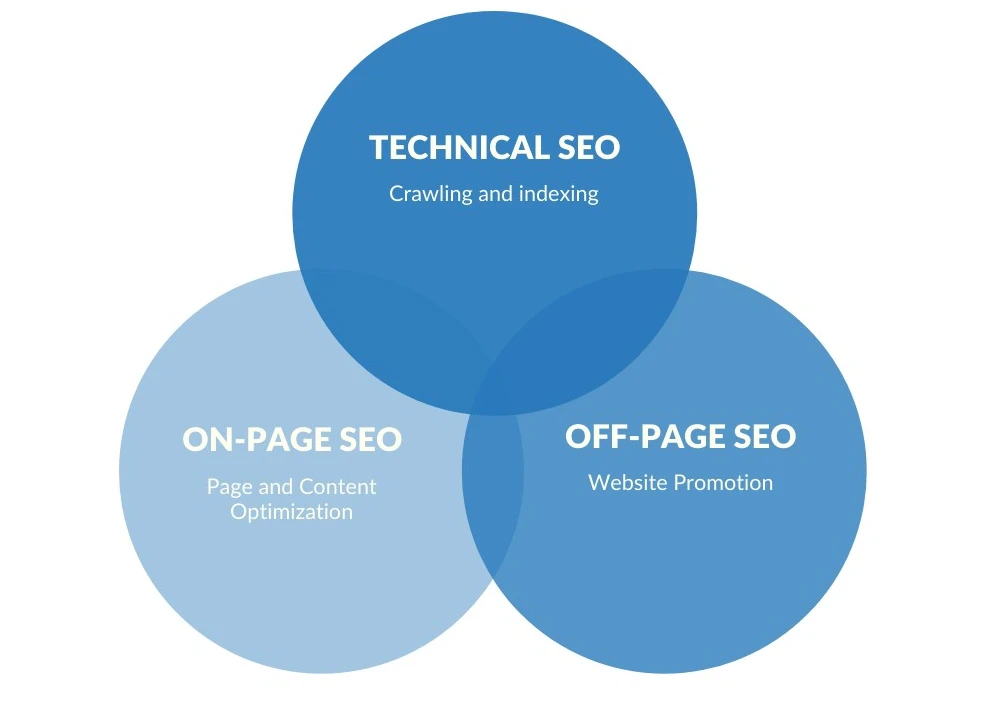
None of the above matters if Google can’t crawl your pages. SaaS sites have a specific vulnerability here: heavy JavaScript frameworks that render content client-side, which search engines handle inconsistently at best.
The checklist:
- Marketing pages should server-render or be statically generated, not assembled in the browser
- Core Web Vitals within threshold: LCP under 2.5 seconds, INP under 200ms, CLS under 0.1, measured on real visits
- A clean XML sitemap submitted to Search Console
- App pages and account URLs blocked from indexing so they don’t dilute your crawl budget
- No duplicate content across marketing pages and help docs
Google Search Console tells you which pages are indexed, which queries you already rank for, and where you’re sitting on page two waiting for a small push. It’s free and most teams underuse it badly. Our guide to technical SEO goes through the audit process, and if pages simply aren’t appearing at all, we’ve covered why a site isn’t showing up on Google separately.
7. Structured Data
Schema markup tells search engines explicitly what a page contains, which improves how it’s displayed and how confidently it’s understood.
For SaaS, the useful types are SoftwareApplication for your product pages, FAQPage for question sections, Organization for your brand details, and Article for blog content. Use JSON-LD, which is the format Google recommends, and validate with the Rich Results Test before you ship.
Adding a genuine FAQ section with proper markup to your key pages is one of the higher-return, lower-effort things on this list. It also happens to be the format AI assistants parse most reliably.
8. HTTPS and Trust Signals
HTTPS is table stakes, not an advantage. Every page needs a valid certificate, and browsers will actively warn users away from anything that doesn’t have one.
Let’s Encrypt issues free, automatically renewing certificates that are perfectly adequate for most SaaS marketing sites. Paid certificates make sense mainly when you need a wildcard covering many subdomains, or when your enterprise buyers ask for organisation validation during procurement. Whichever you choose, automate renewal, expired certificates take sites down more often than attacks do.
Beyond the certificate, the trust signals that affect conversion are unglamorous: a real physical address, named team members, a clear privacy policy, and visible security information if you handle payments or personal data.
9. Social Media as Distribution
Social media isn’t a ranking factor, but it’s how content gets in front of the people who might link to it.
DataReportal counted roughly 5.79 billion social media user identities globally as of April 2026, growing at about 5.4% year on year. For a SaaS product, the useful platforms are wherever your buyers already discuss their problems: LinkedIn and X for B2B, developer communities if you sell to engineers, WhatsApp and Twitter communities for much of the Nigerian market.
Short video performs disproportionately well for reach, and a demo clip of your product solving one specific problem travels further than a written announcement. Use social to distribute, use search to capture demand.
Reviews and Social Proof
Software buyers check reviews before they trust a marketing page, so this is part of your search presence whether you manage it or not.
Ask satisfied customers to review you on the platforms your category uses, and on your own site. Resist the urge to publish only glowing testimonials, a page of uniformly five-star reviews reads as manufactured. Buyers trust a mix, and a well-handled negative review demonstrates more about your support than a perfect score does.
Respond to criticism publicly and specifically. Prospects read those replies closely.
How Long Does SaaS SEO Take?
Be honest with yourself and your investors about the timeline. A rough shape for a new domain:
- Months 1-3: technical foundation, keyword mapping, first bottom-of-funnel pages. Almost no traffic.
- Months 4-6: long-tail pages start ranking. First organic signups, usually a trickle.
- Months 7-12: competitive terms start moving. Traffic curve begins to bend upward.
- Year 2 onward: compounding. This is where the channel becomes cheaper than everything else you’re doing.
An established domain moves faster. A brand-new one with no backlinks moves slower. If someone promises you page-one rankings for competitive terms in eight weeks, they’re either buying links or lying. Our breakdown of SEO cost in Nigeria gives a realistic sense of what proper work is priced at.
Frequently Asked Questions
Is SEO or paid advertising better for an early-stage SaaS?
They solve different problems. Paid ads give you data and signups immediately, which matters when you’re still validating messaging. SEO gives you acquisition that doesn’t stop when spending stops. The practical answer for most early-stage teams is to run modest paid campaigns for learning while building SEO foundations in parallel, so the organic channel is producing by the time you want to cut ad spend.
How much content does a SaaS site need to rank?
Fewer pages than most people assume, done properly. Ten genuinely useful pages targeting buying-intent keywords will outperform eighty thin posts chasing volume. Start with your product pages, a comparison page for each serious competitor, and answers to the questions your sales conversations keep repeating.
Does SEO work for B2B SaaS with a small target market?
Often better than for broad-market products. When your total addressable market is a few thousand companies, the search terms they use are specific and barely contested. You can rank for exactly the queries your buyers type without competing against major publishers.
Should our blog be on a subdomain or a subdirectory?
A subdirectory (yoursite.com/blog) where you have the choice. It consolidates authority into your main domain rather than splitting it. Subdomains can work, but you’re making the job harder for no benefit unless there’s a technical constraint forcing it.
Need help building a SaaS site that ranks? Email us at info@webdesigns.ng, WhatsApp us on 08114900422, or reach out through our contact page.
Need a website that actually grows your business?
Web Design Nigeria builds fast, SEO-ready websites for Nigerian businesses. Let’s talk about yours.