
Small businesses make plenty of content marketing mistakes, and sadly, many of them quietly cripple the growth a content strategy is supposed to deliver before it ever gets going.
This post covers 9 content marketing mistakes small businesses should avoid in 2026.
Mistake #1: Not Transitioning from Traditional SEO to Omnichannel SEO
A common mistake small business owners make in 2026 is sticking to traditional SEO without any plan to move toward a more omnichannel approach.
Traditional SEO focuses mainly on website positioning (on-page and off-page SEO), while an omnichannel approach takes a broader view of optimisation, factoring in user experience, social media, voice search, and other channels beyond search engines alone.
You can attract customers from digital platforms well beyond your website and search results. Skipping this means missing out on diverse traffic sources that could be bringing in new customers, and it can quietly hurt the overall customer experience too.
It’s worth looking beyond your website and building a real presence on other platforms, social media and YouTube included, with content built specifically to engage users where they already are.
Mistake #2: Not Writing for Search Intent

Search intent is the actual reason behind a search, what the user is really trying to find when they type in a keyword. Ignoring it is one of the most common content mistakes out there.
Google only surfaces results that match a searcher’s original intent, and what makes a page relevant is genuinely helpful content that matches that intent.
Plenty of content creators, chasing rankings for a keyword, pad their posts with irrelevant filler that drifts away from what the audience actually came looking for.
Keep search intent front and centre as you write every money page and blog post. One useful exercise: study the pages already ranking for a target keyword, see how they’re structured, then figure out what unique angle or extra value you can bring that makes your page genuinely more useful.
Mistake #3: Being Too Sales-Focused
The end goal is obviously to make sales, but coming across as overly salesy is a real mistake. It’s worth shifting your early focus from selling toward creating genuinely helpful content.
Your money pages should still clearly explain what you offer and how prospects can buy, that’s their job. But research shows the average B2B buyer consumes up to 13 pieces of content before making a buying decision, which says a lot about how much informational content you actually need.
That content, guides, blog posts, comparison pages, tutorials, should support the buyer’s decision-making without feeling like a pitch. It’s what makes your brand useful and trustworthy to prospects who are just discovering you.
These top-of-funnel readers usually aren’t ready to buy yet. Some need more information before they engage, build interest, and eventually consider purchasing, and that’s exactly the audience searching for informational content. Helpful content converts better than sales-heavy content for this group, precisely because it doesn’t feel like a pitch.
There’s a way to weave your solution into informational content softly, without prospects feeling like they’re being sold to. Across all your content, the priority should be giving genuine value first.
Mistake #4: Plagiarism
Content theft comes in several forms. One of the more damaging mistakes a small business can make is copying a competitor’s content, in structure or substance, and presenting it as original on their own site.
Google takes a hard line on this, and it consistently prioritises relevant, unique content. Lifting a paragraph or an entire article can land your business in legal trouble and damage your reputation with readers.
If you’re rephrasing someone else’s ideas, cite the source, it’s the ethical baseline. Recycled information is common across the web, but Google still rewards content with genuinely unique insight and perspective.
If your audience notices your content resembles something they’ve read elsewhere and traces it back, you lose their trust, and they won’t stick around. That erosion of trust also tends to bleed into your broader SEO performance over time.
Mistake #5: Unedited AI Write-Ups

AI-assisted writing is everywhere now. Left unchecked, most of these tools can dilute a brand’s voice, they don’t reliably fact-check, and they struggle to bring the kind of original perspective that keeps an audience engaged.
Publishing AI output without careful review often results in generic, repetitive content that echoes what’s already out there rather than adding anything new.
Use AI as a support tool, for keyword ideas, grammar checks, or first drafts, rather than the sole source of your content. Human-reviewed, audience-focused writing consistently performs better, both for readers and for search.
Mistake #6: Writing That’s Hard to Read
Dense, unbroken writing frustrates readers, especially the majority who scan pages rather than read every word. Every small business should avoid giant walls of text with no breaks or headings.
A good sign your content is too dense: readers lose their place easily after looking away from the page.
Most audiences, regardless of niche, prefer to skim. Break long paragraphs down to two or three lines, use subheadings, bullet points, and numbered lists, and add images to break up long stretches of text where it makes sense.
This makes your content far easier to engage with and navigate.
Mistake #7: Not Leveraging SEO Principles
A content strategy without SEO at its core has limited value.
Content marketing, approached intentionally, can be a genuinely winning strategy for almost any business, and its effectiveness leans heavily on solid SEO fundamentals.
Every piece of content, across every touchpoint, needs to be built with SEO in mind so the right audience can actually find it.
That said, optimising purely to please search engines is the wrong lens. SEO should start with the audience, helping the people who matter to your business find real answers to the questions they’re actually asking, spoken or not.
Mistake #8: Low-Quality Backlinks
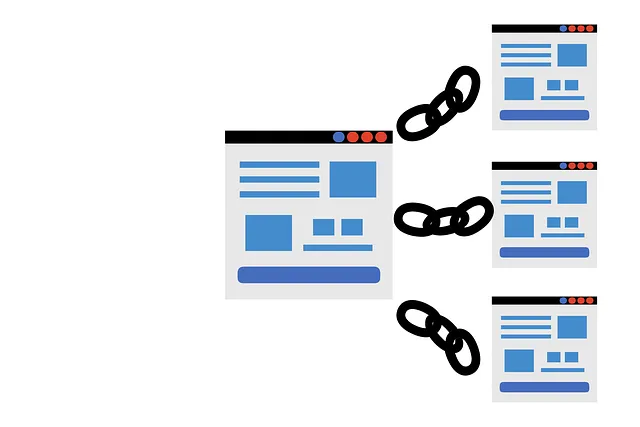
Backlinks are essentially votes of confidence from other websites linking to your content. They signal to search engines that your content can be trusted.
With backlinks, quality beats quantity every time. Links from relevant, authoritative sites are genuine opportunities that can meaningfully shift your content strategy’s performance.
Focus on earning links from sites that are well-regarded and relevant within your industry. As your online presence grows and your content genuinely helps people, backlinks tend to follow naturally, without constant manual outreach.
Mistake #9: Relying Solely on Display Ads
Another common mistake in 2026 is treating display ads as your only monetisation method. They’re popular, but they’re rarely among the best ways to monetise content.
Display ads tend to cap your revenue potential and can quietly distract from more profitable strategies. Returns are often low, especially on lower-traffic sites, and the bigger issue is the hit to user experience: ads can slow down page speed and clutter the page with distractions that drive visitors away.
Consider moving display ads to a secondary role in 2026 and exploring higher-paying alternatives instead, high-paying affiliate marketing, promoting your own products or services, or offering consultancy as an expert in your field.
You don’t need to eliminate display ads entirely, just make sure they’re not actively hurting the experience, and treat them as a secondary revenue stream rather than the main one.
Frequently Asked Questions
What’s the single most damaging content marketing mistake?
Ignoring search intent tends to do the most damage, since it undermines everything else: even well-written, well-optimised content won’t rank or convert if it doesn’t answer what the reader actually came looking for.
Is it okay to use AI for content writing?
Yes, as a support tool for research, outlines, and first drafts, but every piece needs human review, fact-checking, and editing before it goes live. Unedited AI content tends to read as generic and can hurt reader trust.
How often should I check my content for these mistakes?
A quarterly content audit is a reasonable baseline, checking for outdated information, thin sections, weak backlinks, and readability, alongside reviewing new content before it publishes.
Do backlinks still matter for SEO in 2026?
Yes. Quality backlinks remain one of the strongest trust signals search engines use, though the emphasis has shifted further toward earning them through genuinely useful content rather than manual outreach alone.
Looking for a trusted, reliable web agency in Nigeria to add real purpose to your online presence? Web Design Nigeria is ready to be your digital partner.
Send your brief to info@webdesigns.ng or WhatsApp us on 08114900422.
Need a website that actually grows your business?
Web Design Nigeria builds fast, SEO-ready websites for Nigerian businesses. Let’s talk about yours.