
Honestly, starting an ecommerce business in Nigeria seems to be the new oil, as online shopping continues to change the way business is done globally. More entrepreneurs are harnessing ecommerce as a way to lock-in the growing trend for better profitability.
What is an ecommerce business?
Ecommerce businesses are simply businesses that rely on selling products and services using online tech solutions. Most of these types of businesses replace having a physical storefront with creating a digital store with a catalog of products or offers that customers can explore, order, and make payment online from the comfort of their home or office.
Ecommerce business is a growing trend in Nigeria today, and it is easier to start an ecommerce business now than ever. There are several online tools and marketing stacks that are making the ecommerce industry more accessible for small businesses; talk about seamless payment technologies, modern ecommerce platforms, social media selling, and lots more.
Whether you’re selling food items, clothes, digital products, tech gadgets, or offering a professional service like tailoring or consulting, you can reach more prospective customers that are interested in your business through your online shop.
How to Start an Ecommerce Business in Nigeria: 10 Steps
You can go from starting a side hutle to a to an household brand through ecommerce; the opportinties are limitless and it can be achieved cost-effectively. Below are some useful tips to help you launch your ecommerce business.
1. Find Products that Sell
The take off point when planning to start your ecommerce business is to research to find the right product(s) to sell. This is a very critical stage and shouldn’t be taken lightly, its why we have put this as the very first point on the list. Picking the right products is one of the most challenging part of starting your business especially as a beginner.
Even though there are several options, you can come up with a list of factors peculiar to you, so you don’t waste time and investment on the wrong products . The outcome of your product research depends on you looking at the right places; such as checking online for trending and innovative products.
Once you are suFmovinre you’ve found a product idea, the next step is to do a kind of bacgkround check to see if the product is in demand. You go about this by digging deep into who your competitors are, the size of the revenue, their customers or clientele details and more. Another thing you can do is a demand test, for this a small launch can help your research better.
Haven established your product ideas, Its time to figure out how to get a steady supply of your products. Is it a product you need to source locally or internationally? Will you need to manufacture yourself or do retail arbitrage – alongside suppliers and wholsalers? These are some of the next questions you need to thougthfully provide answsers to.
2. Competitive Research
Making research about your competition involves collecting data by understudying similar businesses to yours to understand what they offer, their marketing strategies, and some of their shortcomings that you can use as a leverage in your own offers.
A competitive research (when dones well) will strengthen your marketing strategies and help you compete effectively.
Before you set out to launch your ecommerce business, it’s important to query more into the viability of your products, services and industry; analysing how to approach marketing from the viewpoints of your already successful competitors. A competitive analysis or research will help you uncover creative ways you can leverage to reach new customers.
In essence, start by studying similar brands in your niche or industry to gain as much insight into their products, marketing strategies, sales, and marketing tactics, depth of online presence, product quality, product pricing, customer feedbacks and more.
This research helps you come up witha truly unique value proposition, unearth new opportunities, and stay on top of what’s next for your competitors.
A well-rounded analysis will help you learn what works and what doesn’t, saving you time and costly mistakes.
In all, pay attention to how they build their online presence and how you can match up orexceed them to put you business at vantage. Analyse how their website is crafted, their ecommerce platform choices and why, he outrach channels to potential customers, discounts, perks, social media activity, offers and customer engagement.
There are tens of online tools tht could be useful for your analysis, for web related research you can use tools such as, Google Keyword planner, Google trend, AHREFS or Semrush to check out competitor’s web traffic, and overall SEO health.
3. Write a Business Plan
Crafting a detailed business plan is one of the most important tasks for a new business to have in place. While the process of writing one yourself can be stressful and daunting, it helps you spot opportunities to make your brand stand out. To start, you can use a templatised business plan to craft your own.
Two of the best business templates i recommend are ones shared by Asutralia Business support site @business.gov.au. The second business plan template is the HubSpot and General Assembly’s interactive business plan template.
This document will serve as your guide, get your business thoughts and processes organized,stay focused, set priorities, and clearly document yuur progress. A good business plan must also be broken up into sections such as your brand’s mission and values, making it easier to communicate the vision you have for your business to your investors, partners, or team members.
Most typical business plans start with a cover page, business and company description. Key areas such as the executive summary, company history, competitive advantage, company leadership, and mission statement are also highlighted in this section.
Next up are the sections about your products, what your marketing strategy looks like, your target audience, buyer personas, product line,etc. You should also state what software or marketing technology (things like ERP, CRM software or inbound marketing and sales software) you intend to use to build out and execute each and every strategy and few points why you chose those over tens of other alternatives availablein the market.
Finally, the components of your business plan should include other stuffs like legal, projections & rationale, budget & financials etc.
In all, think of your business plan as your business roadmap to keep right on track in away that is organised. A strong business plan will be a handy piece for your business especially whn you’re seeking funding from investors. Serious business with clear vision have solid business plans.
4. Choose A Business Name
Choosing a business name is a key step in building your ecommerce brand, so before you start off committing yourself to even building the project, let’s consider a few tips here. Your name should be short in terms of the number of letters in it and also one that is memorable. Longer or complex domain names can make it a bit of a struggle for prospects to remember your domain name.
There is tendency for your domain name to be jumbled up when they are super long; so keep it short, unique and catchy as long as it reflects what you sell. Example of short and catchy ecommerce domain names are Jumia, Konga, Amazon etc.
Anoither point of consideration when picking your ecommerce domain name is either to choose .com versus .something else. It;s quite understandable that most domain name on the .com have probably been taken. What we often recommend for or clients in this case is to consider local domain names on the .ng extension for Nigeria.
They are more local-SEO-friendly. If you found out that most of your audience are Nigerians, you wouldn’t go wrong with a local domain name.
5. Design an Effective Business Logo
An effective and well designed logo will help you stamp a great first impression from first time shoppers. See your logo as the face of your business across your marketing touchpoints. Your logo being an essential part of your company’s story should be simple, unique, and have a pride of place elevation when used on you marketing elements.
Business logos are said to be effective when they succintly communioctae your brand’s personality the whole essence of it differentiating you from competitors. Make your logo versatile enough to look good on your website, packaging, and social media. Choose colors and fonts that evokes emotions, and conveys messages.
You can use free tools like Canva or hire a professional designer if your budget allows, in all go for a classic logo instead of a trendy and transitory one.
6. Create a Functional Ecommerce Store
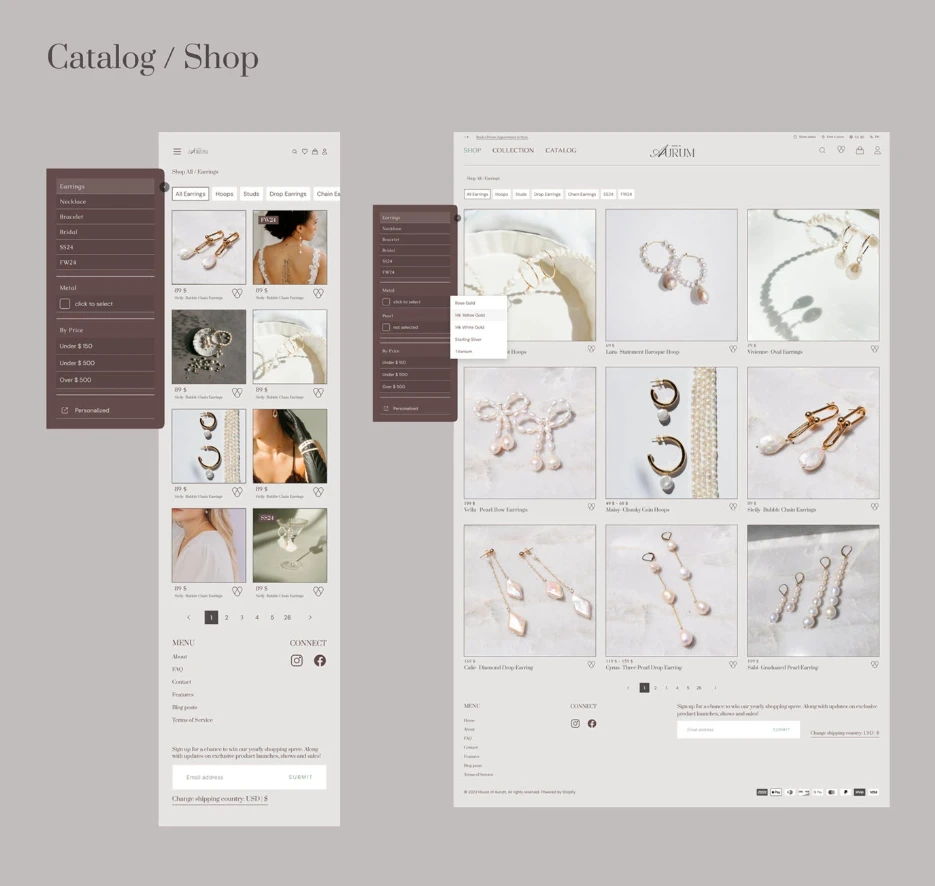
Once you are ready to build your online store, it’s important to make the right ecommerce platform choice, Shopify and WooCommerce are two of the most popular options we often recommend at Web Design Nigeria. Shopify is a managed-hosting platform well known for its ease of use versatility in features, wether you are a beginner or a fast growing business, Shopify can bea great choice.
Shopify comes in clean and beautiful interface, with a massive library of free and paid mobile-friendly ready out-of-the box themes and a simple intuitive visual editor designed to help you set up your ecommerce store with zero coding experience. Minimum and no tchnical bacgkround is required to launch your online store with Shopify.
The possbilities are limitless when it comes to building an online store that fits your vision. However, most of the features you need onboarded to your Shopify store are available through third-party apps and this can cause the cost of running your online shop to add up overtime.
WooCommerce, on the other hand, happens to be the offical ecommerce plugin for the WordPress blogging platform. While Shopify has apps, WooCommerce relies on plugins to integrate new feature to your shopping site. Arguable, WooCommerce offers more flexibility and customization compared to Shopify and that’s if you’re tech-savvy or have a budget cut out to hire an Ecommerce Web Developer.
WordPress, no doubt, is significantly cost-effective than Shopify. At the time of making this post, there are over 13000 free themes on the WordPress platform, many of which are are WooCommerce-friendly. On the other hand, Shopify currently offers 12 free themes, while you have the option to go for more advanced theme with better customization, it often come at a cost, many of Shopify themes cost as high as $300 or more.
While with WordPress, you can build a complete online shop with just your domain and hosting with free themes sourced from the WordPress repository. Both the WordPress and the WooCommerce plugin are available for free as open source solutions that you easily deploy on your shared server.
Beyond deciding on the platform to build your ecommerce website; have it mind to thougtfully build important pages such as compliance pages (terms of use, privacy policy, refund, shipping), product pages with clear product descriptions. You’d also need get ready high-quality product imageries, and go for a costmetics outlook that perfectly fits your brand.
If you’d rather prefer to save cost on launching while having access to an expert technical handler, we’d recommend you work with an ecommerce web developer who can help you setup your custom store, integrate advanced features, handle performance optimization for your online shop and provide provide ongoing support. WDN is your reliable web design solution provider when it comes to building conversion-focused ecommerce sites for your business; be it on WooCommerce or Shopify. You can use the contact page to send us your project brief.
7. Choose a shipping strategy
As you prepare to launch your ecommerce store,you must have in place a clear shipping strategy. Logiastics is at the epicenter of your ecommerce business, so you must have plans around how to handle delivery of products, locally, nationally, or internationally, with view to balancing speed, cost, and reliability. Poor logistics handling can make or mar your business, so you want to be meticulous about this.
You should consider options like flat-rate shipping, free shipping, or real-time rates depending on what works best for your business. There are several shipping services that you can integrate into the core of your ecommerce buisiness and we made sure to mention a few of these providers both locally and internationally in our earlier post on how to sell using WooCommerce.
8. Launch your business
Once your online shop is fully built and ready, the next step is marketing. “Where we always start is: What’s the user’s itch? What’s their pain point that occurs frequently enough to build a habit around?”
Your products and ecommerce business was started to help your customers solve a problem, that should be part of your USP. To be successful in ecommerce business you must be able to get your product in front of the right audience. To attract customers, make your first sale, and grow your customer base effectively, its time to start implementing those proven marketing strategies and customer acquisition methods you have added in your business plan.
Once your inital sales has been realised, it’s time to step on the marketing gasoline. You need to focus your strategies on driving significant laser-targeted traffic to your ecommerce website and have the right tools and methods in place to convert these prospective customers into paying customers.
Start by knowing your top-performing marketing startegy, and then focusing more of your marketing effort there. Experimenting with new approaches will help you uncover some of the best working methods to quickly gain traffic and customers. In all, Consistent marketing will help build a true brand, supercharge your sales, and add up loyal customers consistently.
We recommend social media marketing and content marketing for your ecommerce business.
Social media Selling: SM platforms such as Facebook, TikTok, Instagram, Twiter etc. have proven to offer huge opportunities to reach potential customers. If you can build a strong presence with much intentionality by creating a clear strategy focused on your target audience with
Growing your followers with much intentionality on SM platforms like Instagram, Pinterest, and YouTube by sharing valuable, engaging content regularly is the way to go. Social media isn’t just about likes; followers should consistently be turn to customers or client through promotion and interactions.
SEO: The next best strategy we often recommend to our clients at WDN is SEO content marketing! SEO content marketing can help to increase your search rankings, you can learn to build a strong and authoritative brand through SEO blogging.
9. Using Analytics to Drive Ecommerce Growth
To grow your ecommerce business data is important. There are analytics tools like Shopify reports, Google Analytics segments, and Facebook Custom Audiences that can help you to uncover insights about prospective customers are interacting with the website and how that morphs into sales.
This information will help you make smarter decisions, from marketing to product offerings. For example, Wellborn Fabrics, an ankara fabrics brand, built its success by analyzing Google analytics and Search Console, you can optimize your strategies and focus efforts where they matter most, driving sustainable growth and higher revenue.
10. Eyes on the Goal
When starting an ecommerce store, focus on long-term growth till you make your first one million naira rather than expecting profits in the first year. Spend your early months learning about your target audience to reach the right customers who will buy your products. Choose products that have proven demand and quality because it’s true to an extent that great products sell themselves.

Frequently Asked Questions
How much does it cost to start an ecommerce business in Nigeria?
You can start lean: budget for a domain, hosting or a store builder, product stock, and basic marketing, then reinvest as you grow.
Do I need a website to start an ecommerce business?
Yes, to scale. A proper online store lets customers browse and buy without waiting on WhatsApp, and builds trust.
What sells well online in Nigeria?
Products with steady demand and good margins: fashion, beauty and skincare, gadgets, home items and digital products. Research demand before you commit.
How do I receive payments for my online store?
Use local gateways like Paystack and Flutterwave, which accept naira and cards, alongside bank transfer.
How do I get my first ecommerce sales?
Combine a clear store, social media, targeted ads and word of mouth, and make the buying process effortless.
Need a website that actually grows your business?
Web Design Nigeria builds fast, SEO-ready websites for Nigerian businesses. Let’s talk about yours.