
A solid web design can be the difference between a medical practice that struggles to get discovered and one that consistently brings in new patients. In the medical field specifically, a well-designed website establishes your practice as credible while giving patients and other stakeholders the information they need about your services.
The ideal medical website makes it easy for patients to find your facility, learn about the services you offer, get updates on medical events, book consultations, and initiate care, all before they ever walk through your door.
Here’s what a medical website actually needs to do, and how to build one properly for a Nigerian hospital or clinic.
What Is a Medical Website?
Just as you have physical offices such as clinics and hospitals, think of a medical website as the virtual branch of everything your physical practice stands for. It’s where prospective patients turn to learn about your services at any time of day, before deciding to book an appointment or visit in person.
From the homepage to your About Us, services or treatment pages, and contact touchpoints, a proper medical website needs to showcase your facility clearly and highlight the treatments, comfort, and care patients can expect.
One of the primary functions of a hospital or clinic website is giving patients an online platform where they can access resources, get answers to their questions, speak with a specialist, book appointments (online or offline), and even request prescriptions, all from wherever they are.
When designing a medical website in Nigeria, two things matter most: how you want to present your services, and how your target audience will actually consume that presentation.
What Makes a Great Healthcare Website Design?
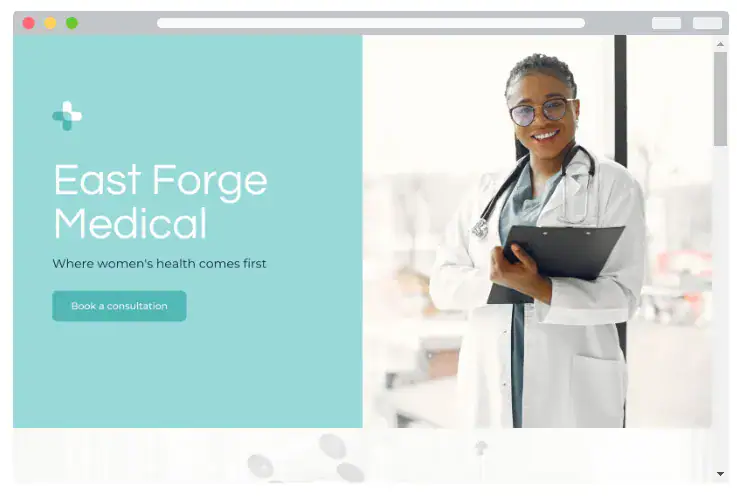
Most of this applies across professional web design generally, not just medicine. Here are the practical fundamentals that make a hospital or clinic website actually work.
1. Mobile Responsiveness
One of the most essential elements of a great medical website is anticipating how visitors will actually access it, smartphones, tablets, laptops, and more, and designing your site to respond and conform to those screens properly.
Mobile responsiveness should be a priority from day one, not an afterthought. Most internet users worldwide now access the web primarily through mobile devices, and that share keeps growing, so a design that only works well on desktop is leaving a large share of potential patients with a broken experience.
2. Easy Navigation
How easily visitors can move around your website determines how well you retain them. The navigation structure has a direct impact on visitor retention: people are one click away from leaving the moment they can’t find what they’re looking for.
Someone seeking medical assistance is often already stressed and doesn’t have the patience to struggle with confusing navigation. Studies on what web users value most consistently rank clear navigation among the top features people look for, and users who can find their way around easily stay longer. A confusing website just pushes them toward a competitor’s site instead.
3. Share Valuable Content
Content is what makes a medical website matter. Other features are prerequisites, but it’s the substance of what you actually publish that keeps people coming back.
For existing patients, a website with genuinely valuable content becomes their first stop whenever they need information or assistance. For first-time visitors, strong content is what keeps them from looking elsewhere: once they see that your expertise matches their needs, reaching out becomes the natural next step.
A website with thin or generic content also struggles with search visibility. That’s a big part of why many new medical websites don’t get indexed properly, or don’t rank even after indexing, thin, copy-pasted content simply doesn’t perform. A good medical website needs well-planned content, written by people who actually understand the practice, not filler text.
4. Use Relevant Visual Media
The right visual media takes a medical website from forgettable to engaging. Content that includes strong imagery consistently outperforms text-only content in engagement, and that gap only grows when the images are genuinely relevant rather than generic stock photos.
For medical web design specifically, using high-quality, real photos of your facility, equipment, and staff (with appropriate consent) builds far more trust than stock imagery ever will. It lets prospective patients judge for themselves whether your services align with their needs, and features like galleries or short video walkthroughs add life to the experience.
5. Include Clear Calls to Action
A medical website isn’t just there to show that you exist, it needs to move visitors toward a specific action: booking an appointment, filling an intake form, requesting a prescription, or contacting the practice directly.
Well-placed CTA buttons move visitors through your conversion funnel more effectively than a static page ever could. As a rule of thumb, keep to one to three CTAs per page so the desired action stays obvious rather than diluted across too many competing options.
6. Alluring Design and Site Architecture
A modern, professional design that makes a strong first impression matters, but it needs to be paired with clear, consistent information about your practice: the doctors, the team, and the treatments offered.
Good site architecture plays a real role in building trust for your practice online, beyond just looking polished on the surface.
Why Aesthetics Alone Aren’t Enough
Because there’s often an information gap between a practice owner commissioning a website and the designer building it, owners tend to focus mainly on how good the site looks. There’s more to it than that.
A website needs to be technically sound as well as visually appealing: built to compete in search rankings and deliver a genuinely good user experience, not just look good in a screenshot.
Designing a good medical website requires a conscious balance of aesthetics and functionality. It’s easier than ever to get an appealing frontend today, but a good-looking site still has to serve the business goal underneath it: attracting new patients by ranking for the keywords they’re actually searching.
For example, there’s little point building a beautiful website for a fertility or IVF clinic in Lagos if it never appears when people search for terms like “IVF clinics in Lagos” or “fertility clinics in Lagos.” A good-looking website that nobody finds isn’t doing its job. That’s why local SEO and technical SEO need to be built into a medical website from the start, not bolted on afterward.
How Much Does Medical Web Design in Nigeria Cost?
There’s no fixed price for medical web design in Nigeria. Cost is estimated case by case, depending on your specific requirements.
Factors like required functionality, site security, payment integrations, and third-party APIs all affect the final price. In practice, what you’ll invest depends entirely on your practice’s specific needs, a simple informational site costs far less than one with booking systems, patient portals, and payment integration built in.
Need a complete medical website for your hospital or clinic in Nigeria? Call us on 08114900422 or send your project brief to info@webdesigns.ng.
Frequently Asked Questions
How much does a medical website cost in Nigeria?
There’s no fixed price. Cost depends on required features like booking systems, patient portals, payment integrations, and security requirements, so pricing is quoted case by case.
Does a hospital or clinic website need a patient portal?
Not necessarily. Smaller practices often do fine with a strong informational site plus appointment booking, while larger hospitals benefit more from a full patient portal.
How important is SEO for a medical website?
Very. A well-designed site that doesn’t rank for relevant local searches like “clinic in Lagos” or a specific treatment misses most of its potential patient traffic.
Should a medical website use stock photos or real facility photos?
Real photos of your facility, equipment, and team (with proper consent) build significantly more trust than stock imagery and help prospective patients judge fit before booking.
Need a website that actually grows your business?
Web Design Nigeria builds fast, SEO-ready websites for Nigerian businesses. Let’s talk about yours.