
Construction companies compete on more than price and completion time. They compete on whether a prospective client can find them online, quickly understand what they build, and trust them enough to send an enquiry. A website is how most of that first impression happens now, long before anyone picks up the phone.
People searching for a construction company near them are also searching for confidence: proof that the firm has done this kind of project before and finished it properly. A clear, well-organised website gives them exactly that, and a vague or dated one quietly pushes them toward a competitor.
What Is Construction Web Design?
Construction web design is the process of building a website that represents a construction business and markets its services to the right audience. To do that well, the site has to be fast, easy to use, and readable on a phone, since that’s how most people will find it first.
A good construction website makes a strong first impression and gives visitors the key information they need to decide whether to reach out: what the company builds, where it operates, and how to get a quote. It’s worth deciding early what the site is actually for. Is it mainly generating leads, building brand credibility, or supporting a sales team that’s already busy? That decision shapes what content gets written and what gets prioritised on the homepage.
How to Build a Construction Website in Nigeria
Most construction firms are better off working with an experienced web designer rather than assembling a site themselves. A good designer can also advise on domain names and hosting, so the technical foundation is solid before design work even starts.
The final result depends heavily on the brief you give the designer: what you want the site to achieve, who it’s for, and what makes your firm different from the next construction company a prospect finds.
Why a Well-Designed Website Matters for Construction Firms
The homepage gives visitors their first real look at the business. A well-designed one should be inviting enough to pull people further into the site, toward services, past projects, and the people behind the company.
A construction website also builds credibility. Regularly updating it with completed projects and genuine client feedback signals that the business is active and trustworthy, which matters a lot when a client is about to commit serious money to a contractor. Paired with a tailored digital marketing effort, a strong website also tends to bring in more qualified enquiries over time, not just more traffic.
A portfolio section does a lot of the persuading on its own. Showing past work, with real photos and a short explanation of the scope, helps prospective clients judge whether a firm can actually handle their project, whether that’s a full build, a renovation, or commercial fit-out work.
Accessibility matters too, particularly on mobile. A site that’s awkward to use on a phone will lose visitors to a competitor’s site that isn’t. And none of this works without a way for interested prospects to actually get in touch, whether that’s a contact form, a listed phone number, or a WhatsApp link.
Key Elements of a Professional Construction Website
Construction websites differ from most other business sites in a few specific ways.
Design matters more than people expect. Colours and layout should reflect the brand, and the company name and logo should show up consistently across the site, not just on the homepage. A site that looks dated or thrown together undercuts the very credibility a construction firm is trying to build.
The site should also feel current: clean, professional, and built around good-quality photography rather than stock imagery. Navigation needs to be simple enough that visitors can find pricing information, certifications, and testimonials without digging.
A full list of services helps visitors self-select, whether they need a full build, a renovation, or something more specialised. Including rough price indicators where possible helps prospects budget before they even reach out, which tends to filter in more serious enquiries.
An about us page that introduces the company’s story, values, and key team members (with relevant certifications) adds a layer of trust that a services page alone can’t. Regular content, project write-ups, behind-the-scenes updates, industry commentary, keeps the site relevant to search engines and gives returning visitors a reason to check back.
A contact form should capture enough detail (name, contact information, and the reason for getting in touch) to let the team follow up properly. And every page should nudge visitors toward some kind of action, whether that’s requesting a quote, signing up for updates, or reaching out directly. Genuine client recommendations, placed where visitors will actually see them, do more to build trust here than almost any other single element.
Mining and Construction Website Design
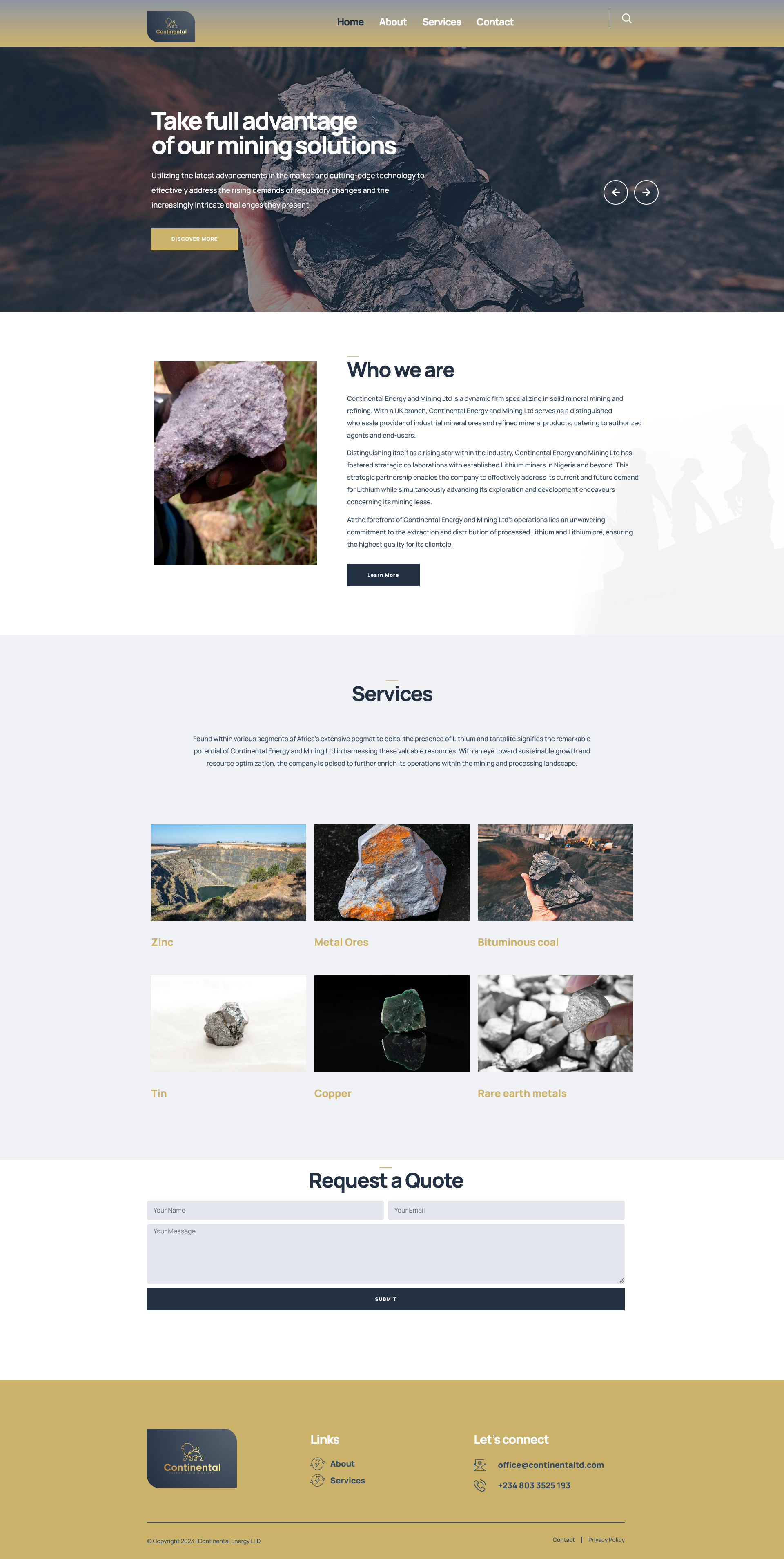
Mining companies need the same kind of purpose-built website as any other construction-adjacent business, and the same basics apply: simple navigation with important pages placed first, a design that works on every device, and a site that loads fast regardless of a visitor’s connection speed or region. A good hosting setup and CDN go a long way toward the last one.
Clear calls to action matter here too, whether that’s “Contact Us”, “Request a Quote”, or “Learn More”. Strong imagery and video, well-written content, and consistent styling across the site round out what a professional mining or construction web presence needs.
What It Costs
Construction websites follow the same pricing logic as other professional Nigerian websites: cost scales with functionality and content, not just page count. A straightforward brochure site with a portfolio and contact form costs considerably less than one with a custom quote calculator, a project management portal, or multilingual pages for international clients. See our full web design cost in Nigeria breakdown for specifics.
Frequently Asked Questions
How much does a construction website cost in Nigeria?
Most construction websites fall within the standard professional website range of ₦220,000 to ₦5,000,000+. A simple portfolio site sits at the lower end, while custom quote tools or client portals push the price up.
What should a construction website homepage include?
A clear statement of what the company builds, its location and service area, a route into the portfolio, and an obvious way to request a quote.
Does a small construction firm really need a website?
Yes. Most clients now research a contractor online before ever calling, so a firm without a website is effectively invisible during that decision-making stage, no matter how good the actual work is.
How often should a construction website be updated?
Regularly enough to show the business is active. Adding a new completed project, a client testimonial, or a short update every few weeks keeps the site relevant and gives search engines a reason to keep crawling it.
Conclusion
Owning a well-designed website is one of the more direct ways a construction company can expand its reach and win more of the right kind of client. Need a professional, lead-generating construction website? Send your project brief to info@webdesigns.ng or WhatsApp us on 08114900422.
Need a website that actually grows your business?
Web Design Nigeria builds fast, SEO-ready websites for Nigerian businesses. Let’s talk about yours.