
The digital age we are in is so structured that websites have become one of the most effective touchpoints between the business and its customers. The same goes for aviation businesses – and most aviation service providers are quite aware of this, so they make sure they never flop with their aviation web design.
Whether for their flight booking services, AC online check-ins, or interaction with customer support, we can’t deny the value a good aviation website can bring to a company.
As competition in the industry continues to increase, an effective online presence is no longer a luxury but one of the key ways for airlines willing to thrive even better in the game.
One way to do this is by having an efficient aviation website – and we’ll be giving you some insights on what a great Aviation website should look like in terms of features and functionalities.
We will be outlining some tips you should take note of, if you are to build a good aviation web design, and also, give some examples of airline websites that have implemented these tips for designing their own website.
Tips for Building a Good Aviation Web Design
Whether you’re an experienced web developer, a freelancer, or a business owner looking for some inspiration for an aviation web design, this article has got you covered.
1. Make it SEO-Friendly
Websites today are not built just for the sake of it. One of the goals of building a website for any business should be to attract prospects.
To achieve this, there is a need to set up a website that can organically attract the right buyers.
A would-be successful website must be able to deliver on its awareness reach goals, because if people don’t discover the business, then how will they interface with potential customers?
Understand that, not just any website will work in this case, the web must be built with quality top of mind from day one. This is because a substantial 94% of the impression first time customers have about your business comes from how professional your business site looks.
The easiest way is usually to focus the website on well-structured pages, with proper keyword placement across all money pages, as well as follow-up content marketing plan such as creation of new quality service pages or blog posts. These are built not just to rank on the first page of top search engines, but also to intentionally provide value to stakeholders in your industry, most importantly your prospective customers.
Other advanced methods involve designing the website such that search engines use it as a reference point when people search keywords on aviation.
It’s also recommended to allow your domain name to contain keywords like “airlines, aviation, airways”, etc.
This way, if you’re not spending so much on marketing (especially as a startup), you still get a shot with the competition on SERPs
2. Adopt Modern Design and Useful trends
This is a no-brainer; the last thing you want is to be left behind in the ever-evolving online space, and so do your customers. It’ll serve you well to not only be in touch with the latest happenings in the industry, but also sharing it with your prospective clients.
The blog section of your website gets to play a vital role here, and you also want to include some educational articles, so your audience isn’t just updated concerning the aviation industry. They’re also encouraged to choose you as their service provider.
3. Social Media Integration
Before we talk about having a dedicated customer support desk integrated into the website, it should already be working hand-in-hand with your social media accounts. Not only to reshare posts, but also as a means through which your customers can reach out to you.
If you’re a startup that isn’t running on a financial budget that allows you to maintain a customer support desk in your website, your social media should be enough to patch that hole. Simply redirect your clients there for any enquiries.
4. Allow a Handy Space for Downloadables
This is very much advised if you’re running an aviation manufacturing website, or any other service in the aviation industry that isn’t airline-related, where you get to book flights. You should make long-form pamphlets, brochures, and documents downloadable for offline access by your prospective clients. Aside from making your website user-friendly, it also gives you an avenue to gather relevant information of your future clients for later use.
5. Maintain the Brand’s Story
The kinds of photos, blog posts, and videos (if any) should follow a specific theme that tells the brand’s story. All content should work toward one goal – the one that aligns with the company’s vision and mission statement. It’s important that this is done from the start so that marketing campaigns shouldn’t be a challenge when the time comes.
6. Conventional & Minimalistic Interface
Our advocation for a minimalistic interface should not be seen as an easy way out strategy for web design agencies (of course, web agencies will design according to your outlined specifications). Rather, it is a way to help you reduce the chances of customers having to navigate a complex web interface to find what they’re looking for on your site. Buyers don’t have the luxury of time to figure things out, they expect you to do that by adopting a simple and clear navigation structure.
The message here is to keep the experience simple and straightforward with a minimalist web architecture, such as clutter-free pages, sparing use of images, and clear navigation menus, buttons, and CTAs. From experience, the simplest-to-use websites are often the most memorable for customers.
5 Best Airline Web Design Examples
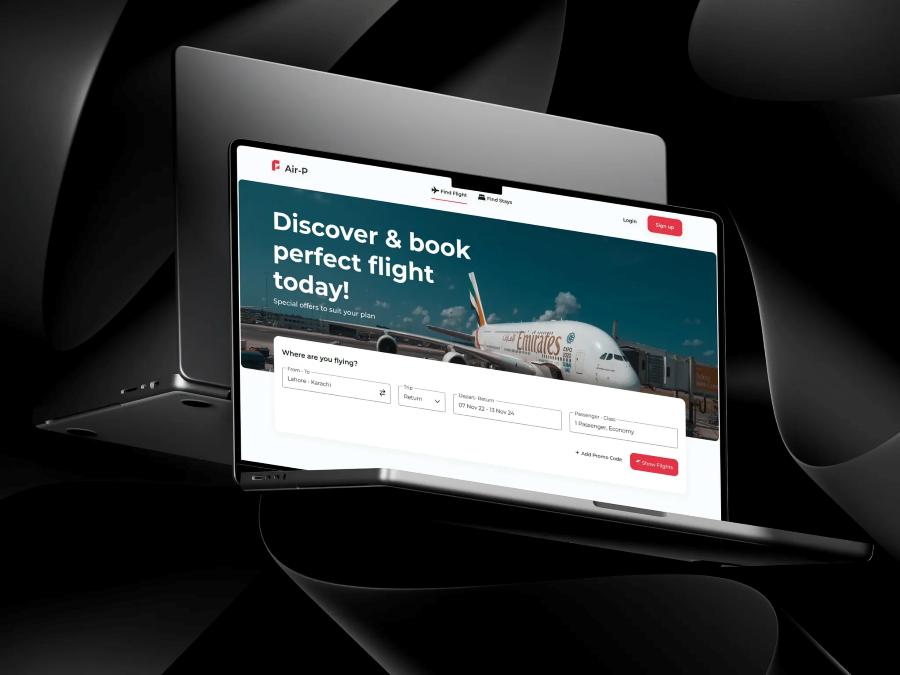
We’ve been discussing, for so long, the dos and don’ts for an aviation web design. This time let’s focus on aviation websites that have been successful following these ideas.
Air China: Air China makes this list for its ability to accommodate their customers across all demographics. The first thing you do when you search on the website is to select your region and language, then you’re automatically taken to the homepage specifically designed for your language and region. The platform also contains vibrant visuals with intuitive navigation that embodies the ever-growing transport industry in China.
Arik Air: Arik Airlines has arguably one of the simplest aviation websites you’ll find for a west-Africa based airline. Everything is streamlined to allowing users to book flight tickets, and read terms of service. Although they don’t keep a space for downloadable, they do have an in-built customer service panel, and also adds their call line on every page. They’re already a hit before the recent trend of social media integration became a thing, although they have the relevant social Media pages, it’s not directly integrated with their website.
Topaz Aviation: Topaz Aviation is a company that focuses on serving top-class travellers. They run private charters, group and corporate charters, ground handling for international airports, and sales of spare parts. Going by their target audience, it’s expected that their website gives a narrative – simplicity, efficiency, and luxury. True to form, they clearly show this with a stunning black and white background, high contrast look, and overall clean layout.
Spirit Airlines: If you’re a regular traveller in the US, Caribbean, Central America and North America, chances are you’ve probably flown with Spirit Airlines. Their website has got all the hallmarks of a good aviation web design. Although, having everything makes the website somewhat look busy and untidy, you can’t help but acknowledge that it manages to satisfy every customer.
SkyRoads: Quite similar to Topaz, SkyRoads is an aviation company that outsources its services to actual airlines or other firms in the aviation industry. They run Fleet management, traffic planning, weather data, radio communication and lots more. Given that they only serve other companies, the primary tip they’re using here is maintenance of a consistent storyline. Of course, their white paper is also downloadable, and they run a press release section to show clients their highlights in the aviation industry.
Final Takeaway
The aviation industry is a very large space. Throughout the process of an individual booking a flight and getting to their destination, there are aviation companies offering services to other aviation companies.
The kind of aviation website design you choose to implement largely depends on the service you’re offering in the space.
We’ve given you some tips to help build a decent platform, we’ve also added examples cutting across different aviation micro-niches.

Ready to elevate your aviation brand with a high-performing website? Let’s design a sleek, fast, and conversion-driven online presence that truly takes off.
Contact us today to get started!
Frequently Asked Questions
What makes a good aviation website?
Fast, mobile-first, SEO-friendly design with simple navigation, easy booking or enquiry, clear branding, and downloadable resources where relevant.
Why does an aviation business need a website?
It is the main touchpoint for bookings, check-ins, support and discovery. A professional site builds trust and wins customers searching online.
How do I make my aviation website rank on Google?
Build SEO in from day one with well-structured pages, relevant keywords, fast loading, and a steady stream of useful content like blog posts.
Should an aviation website have downloadable brochures?
Yes, especially for non-airline aviation services. Downloadable brochures and documents add value and help you capture leads.
How much does an aviation website cost in Nigeria?
It depends on features like booking systems and integrations. Ask for a quote based on your services and the functionality you need.
Need a website that actually grows your business?
Web Design Nigeria builds fast, SEO-ready websites for Nigerian businesses. Let’s talk about yours.