
Creating a website can feel deceptively simple; until you actually find yourself sweating it out in front of a blank screen trying to figure out what goes where. Definitely, there’s a lot to put into consideration if your goal is to launch an effective business website, and while it’s tempting to just jump into building something flashy and put that out there, the fact is, a great web design is often more about restraint, clarity, and a bit of patience above anything else.
#1. Have a clear Purpose
Being clear in purpose and goal is the first step in building a great website. That might sound obvious, but you’d be surprised how many sites were built out of a lack of clarity of purpose. Many of these sites are floating around without proper customer journey and call-to-action implementation.
It all depends on what long- and short-term issues you want your website to address. For example, an Optician web design will need an appointment page where prospective patients can book an appointment to see an optician, download a guide on how to care for their eyeglasses, or simply contact the hospital for an emergency. That goal should be front and centre from the get-go. A purposefully built site is non-negotiable!
#2. Navigation matters
The essence of navigation on a website is so that web users or visiting audience don’t have to guess. Your navigation should be very intuitive. Think of your site as a flat with several compartments: people should know exactly where they need to go, and what they should expect to see behind each door, just by looking.
Such clear progression comes from properly planning your web architecture upfront. It pays off to have a storyboard, create page silos, define your core service pages, and stick to a website layout that flows logically from one section to the next, guiding the customer to a definitive ending.
#3. Content placement
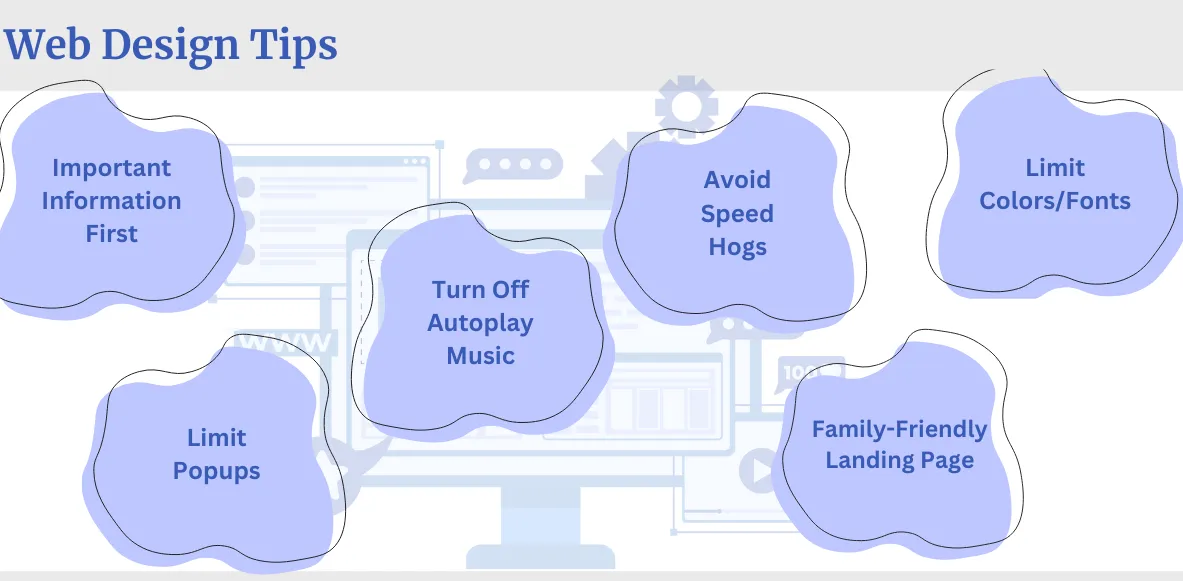
Content placement is a design-age-long idea that posits the necessity of putting the most important stuff “above the fold.” It still holds relevance today that the part of the screen that shows before a user starts scrolling is an important web estate that should be made to communicate the best part of what the project stands for.
The attention span of people today is very short considering numerous options and alternatives within their reach. In light of this, when someone spends just five seconds on your site, it’s important to make sure that those five seconds count. So put forward your best value proposition. It could be a striking image, a powerful tagline, and a CTA right where it can’t be missed.
#4. Use whitespace Generously
But also, let your design breathe, and one effective way to do that is to generously use white spaces where necessary. White spaces should not be mistaken for thoughtless empty spaces; rather, they are intentional spaces left to give your content the ambiance to stand out and keep things from feeling cramped.
White spaces are not necessarily white. They could be communicated with patterns, colour, or gradient and are used to attract focus and emphasis on certain elements of the design.
Your site will actually feel more sophisticated with a clutter-free and breathable design. This allows you to achieve balance in your web design as well as make your website look high-end in feel. The outlook of your page is calming and welcoming, rather than the overwhelming feel seen on complex sites with web elements packed together.
#5. Visual Hierarchy
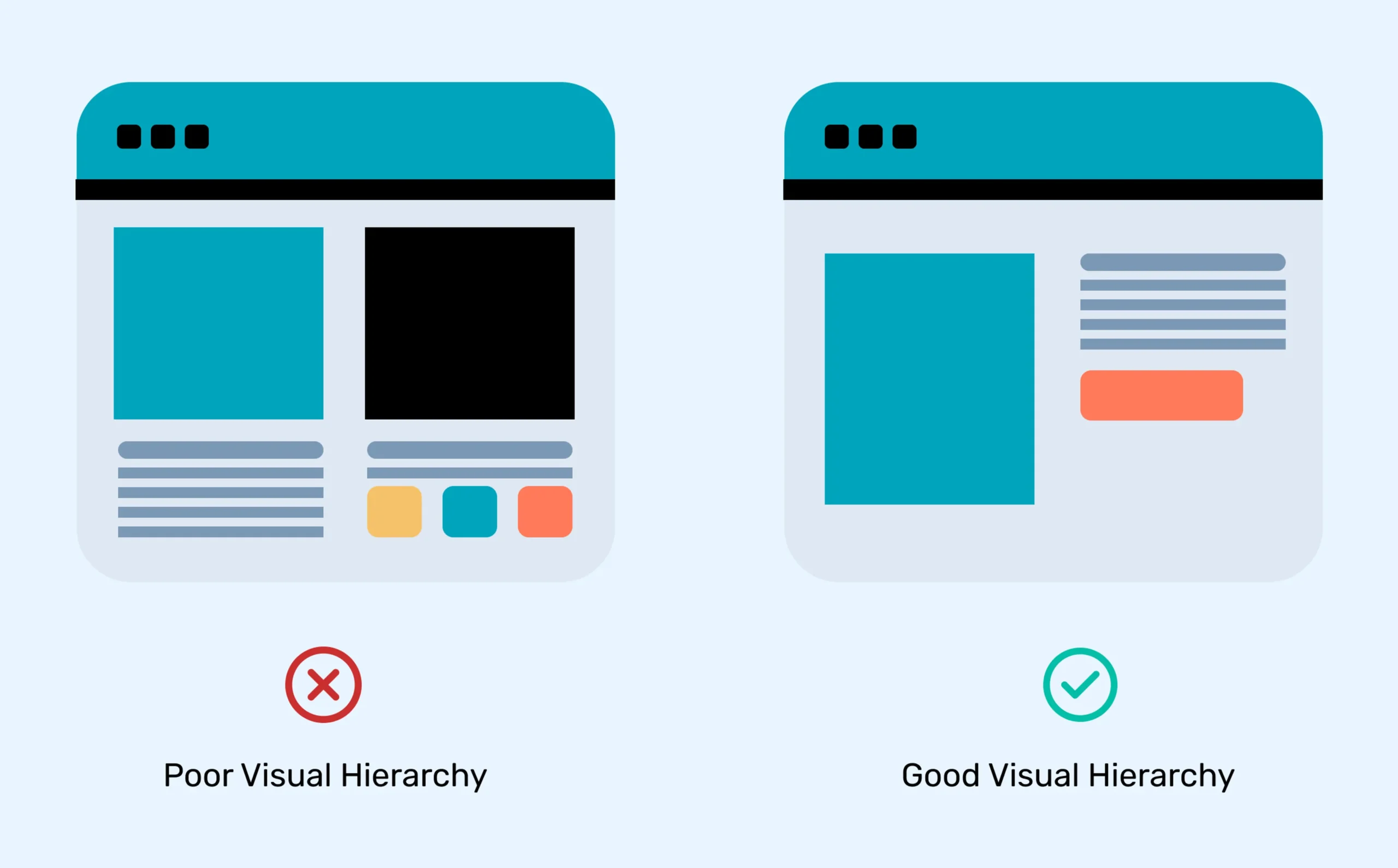
Visual hierarchy is people noticing first the big elements, and that helps to guide their reading patterns naturally. You can use these two popular reading patterns: F-shape or Z-shape to your advantage for best user experience. Headlines, subheadings, buttons, all should be positioned to guide the eyes exactly where you want them to go.
And please, don’t use ten different fonts. Pick one or two that are clean, legible, and set a focal point for your branding. Consistency in your design will help lead your users’ eye to key elements such as CTAs, headlines, and other important information on your site. Even if the visitor can’t consciously articulate why it feels good, it just does!
#6. Cohesive Branding
You should treat your website as a brand touchpoint and the epicentre of your marketing, rather than just a brochure. Every font, button, colour, and image should be in alignment with your brand identity. Check if there is consistent messaging across your channels. Do they make your brand look friendly, well-explained, and approachable? Also ask: is it sleek and modern? Is it professional and authoritative? These subtleties will signal a lot to your audience, often before they’ve read a single word.
Images, by the way, are powerful. But stock photos… they often fall flat. You can almost smell them; those overly posed handshakes, the grinning team staring just a bit too directly at the camera. Try to use original imagery where possible: real people, real spaces. Or, at the very least, stock photos that feel candid and natural.
#7. Enhanced Page speed
Server speed should not be an afterthought. Your page speed score and other Core Web Vitals should be on point. A slow site is a dead site. Users bounce, SEO suffers, and no one’s impressed.
Be sure your images are compressed and in web-friendly formats like WebP, optimise your website codebase, and use a CDN. There’s plenty of technical advice out there concerning boosting your page speed, but the bottom line is simple: your site needs to load fast.
#8. SEO
Speaking of SEO; it should be integrated from the ground up. Being intentional with optimisation from day one will mean that every line of code created is non-bloated, web URLs and key pages are optimised following best SEO principles, smart use of headings (one H1 per page, folks), keyword-rich content flow with human appeal, and yes, a well-considered domain name that fits in well with your brand and industry: short, memorable, brandable.
#9. Security
Your website needs to be secured. That’s not just about having SSL certificates installed (although those are non-negotiable). It’s about keeping your core web files and other modules, extensions, or plugins powering the site updated. For this, you’ll need strong passwords, server firewall system, correct server configuration folder permissions, and regularly testing forms and modules to make sure everything works as expected.
There’s nothing worse than having your customer data compromised due to web security issues.

#10. Lots of testing
Testing in general is underrated when building simple business sites. But it’s important to check every CTA button, click every link, submit every form to test the flow. Test the website across different screen sizes, even have it opened up on a dusty old Android mobile device. That’s because what looks just perfect on a retina MacBook may fall apart in the wild, so it’s important to achieve a mobile-first design. Responsiveness is not only the main point of consideration but also usability. A user-friendly website is one that is thumb-friendly and explorable without squinting.
#11. Top-notch Content Strategy
Web copies and content should not be seen as just fillers between design elements; they’re often the reason people came. Good web copies help any business to build trust, answer questions, and subtly sell without being the pushy business that always throws marketing in the face of their prospective customers.
Today, people don’t want to be marketed to, so you need well-refined web copies such as blog posts, case studies, well-researched informative pieces paired with reviews or testimonials from existing customers, and then see how much credible presence you’ve got going forward.
Understand, people want to hear from people. If someone had a great experience, share it. Don’t tuck it away on a hidden testimonial page; bring it forward.
#12. Social Proofing
There should be a connection between your website and social media touchpoints. This is the place for social media integration in web design. Include buttons that link to your social media channels, but more than that; integrate them in a way that makes your brand feel alive. A feed, maybe. Or just regular content updates that show you’re active and genuine. It’s all part of the ecosystem.
#13. Link Building
Backlinks also play a huge role for small business sites. They are like votes of confidence for search engines, especially if you’re thinking long-term. Quality mentions from other reputable sources and websites across the internet will send good trust signals to search engines about your website’s credibility.
It doesn’t happen overnight, but writing guest posts, being featured in directories, or getting involved in your industry community can go a long way to attract some of these natural backlinks. Also, avoid orphan pages; pages are to be interlinked within the site to improve user experience, reduce bounce rate, and boost engagement.
No matter what, when building a business site, it pays to have a real plan. Before you even open a design tool, map out your goals, create a promising web structure, and make sure your content pages are top-notch. Decide how visitors will move through your site, and what you want them to do at each point.
Planning upfront will help save you considerable hours and cost for development.
Finally, building a great website is more of a mindset thing than a checklist item, which is why you need to work with an experienced web development agency like Web Design Nigeria and also stay open to upscaling your entire solution as required. Great websites aren’t built in a day. Test. Gather feedback.
Look at analytics and other metric data on what works and what doesn’t, and tweak accordingly for better results.
So, if you’re just setting out to design or redesign your website, just breathe. Take it step by step. Don’t rush. Focus on clarity, consistency, and the experience you’re creating for the people who’ll actually use it. In the end, that’s what matters most.
Frequently Asked Questions
What makes a good small business website in Nigeria?
Clarity of purpose, intuitive navigation, fast mobile-first performance, consistent branding, and content that builds trust and guides visitors to act.
How many pages does a small business website need?
Start lean. A clear homepage, services, about and contact pages are often enough; add more only as your goals require.
Why is page speed important for a Nigerian website?
Most visitors are on mobile data, and slow sites lose users and rankings. Compress images, use WebP, and keep the code light.
Should I use stock photos on my business website?
Use original images of real people and spaces where possible. If you must use stock, choose natural, candid photos rather than stiff, posed ones.
Do small business websites need SEO from the start?
Yes. Build SEO in from day one with clean structure, one H1 per page, fast loading, keyword-rich but human content, and a brandable domain.
Need a website that actually grows your business?
Web Design Nigeria builds fast, SEO-ready websites for Nigerian businesses. Let’s talk about yours.