
A web hosting business is one of the more viable tech ventures for anyone with a development or IT background looking to build a recurring-revenue business.
If you’ve been eyeing the opportunity in Nigeria’s web hosting space and wondering how to get in as an entrepreneur, this guide covers what actually matters: cost, technical requirements, partnerships, customer support, marketing, and scaling.
Nigeria’s internet economy keeps expanding, and demand for reliable web hosting keeps growing alongside it as more businesses establish a digital footprint. Here’s what it takes to launch a reseller web hosting business in Nigeria.
What Is Reseller Web Hosting?
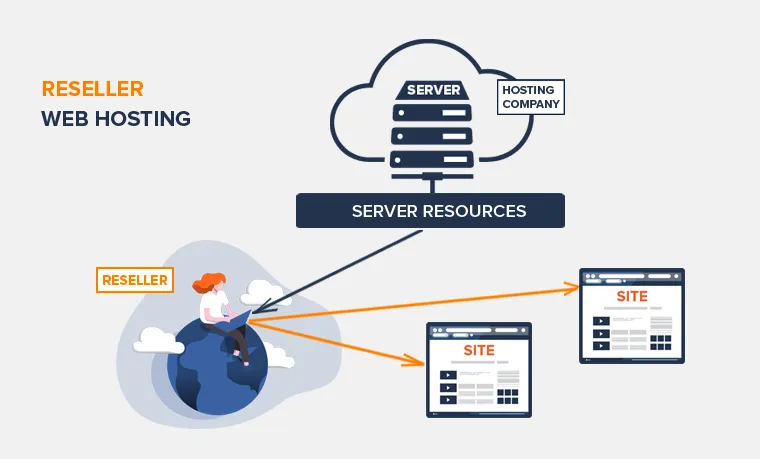
Reseller web hosting is a white-label business model: you purchase hosting resources in bulk from a provider, then repackage and resell them to your own clients under your own brand. It’s essentially a middleman business, and a genuinely solid income source if approached properly.
You don’t need your own data centre to get started. You can partner with established infrastructure providers like Google Cloud, AWS, Hetzner, OVHcloud, or Alibaba Cloud and build your business on top of their infrastructure.
Most businesses increasingly see a website as essential to their growth strategy, and every website, regardless of type, needs the right hosting to actually go live. Not every hosting provider delivers reliable, consistent performance, which is exactly the gap that creates opportunity for a well-run reseller hosting business. Plenty of Nigerian businesses are happy to work with local hosting providers, provided the service quality holds up.
Benefits of Reseller Hosting
Why is reseller hosting worth considering as a business idea?
First, upfront costs are relatively low compared to building your own data centre, which can run into the tens of millions of dollars per megawatt of IT capacity. Second, you benefit directly from your parent host’s technical support and infrastructure, particularly useful if you don’t have deep server administration experience yourself. Third, reseller hosting lets you focus on the business side, customer satisfaction and growth, while your host handles the heavy lifting of server maintenance.
Steps to Start a Reseller Hosting Business
1. Market Research and Analysis
Start by identifying your target audience clearly. Are you targeting small business owners, digital marketing agencies, bloggers, or ecommerce sites? Each group has different hosting requirements and expectations, and that shapes everything from your pricing to your support structure.
Follow that with competitive analysis: research existing hosting providers in Nigeria, their pricing, their offerings, and their customer reviews and reputation. This helps you identify real gaps in the market before you launch.
2. Select a Hosting Partner

Your choice of hosting partner directly determines the quality of service you can offer. Key factors to weigh:
Reputation: Check reviews on Trustpilot, G2, forums, and social media before committing.
Control: You want meaningful control over your allotted hosting infrastructure, not a black box.
Customisation: Look for a white-label solution that’s genuinely customisable, server setups, hardware, and customer management tools should all be accessible to configure.
Reseller Support: Make sure billing software, control panels, and API integrations are available to you as a reseller.
Reseller Benefits: Favour providers offering meaningful discounts at scale and support for growing your customer base without friction. Your host’s quality directly shapes the quality of what you can offer your own customers.
You’ll also need to choose between traditional reseller hosting, which allocates space on a dedicated server, and modern cloud environments, which offer more flexible scalability for you and your clients. Base this choice on your projected growth, anticipated needs, and budget. Customising server specs like core count and drive type can also give you a real performance edge over competitors.
3. Choose Your Hosting Control Panel Software
When picking control panel software, weigh its feature set, suitability for your needs, and cost as your business scales. Licensing costs for tools like cPanel and WHMCS have become a real pain point for smaller resellers, eating into margins, which is why many now look at alternatives.
DirectAdmin is known for simplicity and covers the essentials well, good for a straightforward setup.
StackCP offers a modern, user-friendly interface that works for both beginners and advanced users.
cPanel is the most widely recognised option, with a comprehensive toolset suited to a range of skill levels.
Plesk offers a robust feature set aimed at developers and agencies, with extensions that adapt well to varied project needs.
Your choice should ultimately match your technical expertise, the complexity of what you’re hosting, and your specific business needs.
4. Set Up Your Frontend and Main Hosting Panel
Your frontend is the first point of contact for prospective customers: the layout, design, and interactive elements that shape how people experience your site.
Build a frontend that’s both search-friendly and genuinely easy to use, connected seamlessly to your main hosting panel where customers create accounts, search or register domains, and select a hosting plan. That connection needs to work reliably so data gets processed, stored, and retrieved without friction.
A few configurations worth prioritising early:
- Domain configuration
- Custom DNS setup
- Server configuration
- API integrations
- Free SSL/TLS certificates
- Malware scanning
Once it’s running, you’ll need a team to monitor and maintain the connection between frontend and backend, keeping both updated for security and performance over time.
5. Create Hosting Packages and Pricing
Build your packages around your target audience’s actual needs, not just around undercutting bigger hosting companies on price. Focus on resource allocation, hardware, software quality, and support responsiveness as the basis for your pricing, and let your packages reflect a genuine value proposition rather than a race to the bottom.
6. Build a Robust Support System
A solid support structure starts with a good control panel paired with ticketing and billing software; WHMCS remains a popular choice for managing billing and support alongside a compatible host.
Define your operational hours clearly, and build in multiple communication channels, WhatsApp, live chat, email, and ticket support, so customers can reliably reach you. Consistent, responsive support is one of the biggest differentiators in a market where infrastructure quality between resellers is often similar.
7. Set Clear Terms of Service
Every host, resellers included, needs clearly defined terms that discourage unlawful, harmful, or disruptive customer behaviour. As a reseller, you also need to align with your parent host’s acceptable use policy, typically published on their site. It’s worth getting guidance from your host directly to put together solid, legally sound terms.
8. Build an Experience Management Team
As you grow, put together a team covering domain management, server administration, payment processing, customer service, technical support, and marketing. Coordinated ownership across these areas is what actually drives customer satisfaction and long-term retention.
9. Establish Your Hosting Business Online
Launching your hosting business, like any business, requires a real online presence. That means publishing genuinely useful content that helps prospective customers solve problems they’re actually facing, not just running ads to a landing page.
The strongest hosting companies build extensive guides and blog content addressing the issues their future customers are likely to run into. That content becomes a real acquisition channel over time, alongside whatever mix of display ads, search ads, or organic content marketing fits your budget.
Ultimately, reseller hosting’s success comes down to consistency and professionalism, offering managed infrastructure or application services means your reliability is on the line every time a client’s site goes down. Your hosting partner is the foundation everything else sits on, which is why that initial choice matters as much as it does.
For more on picking the right infrastructure partner, see our guides on the best web hosting providers in Nigeria and the benefits of local Nigerian web hosting.
Frequently Asked Questions
Is technical expertise necessary to start a reseller hosting business?
Not deep technical knowledge, though basic troubleshooting skills help. Most parent hosting providers offer support to help resellers handle technical issues they can’t resolve alone.
How can I stand out in a competitive hosting market?
Differentiate through specialised packages, genuinely responsive customer support, and marketing that speaks directly to a specific niche’s needs, rather than trying to compete with larger providers purely on price.
Can I transition from reseller hosting to owning my own infrastructure?
Yes, as the business grows, expanding into owned infrastructure is a natural next step, though it requires careful planning and significant capital investment.
What’s a realistic profit margin for a reseller hosting business?
Margins vary based on pricing strategy and customer retention, but a well-run reseller business with a stable customer base can build healthy, recurring margins over time.
How do I keep my clients’ websites secure?
Choose a hosting partner that prioritises security, keep software updated, enforce strong access controls, provide free SSL certificates by default, and educate clients on basic security practices.
Ready to launch your reseller hosting business with the right technical foundation? Send your brief to info@webdesigns.ng or WhatsApp us on 08114900422.
Need a website that actually grows your business?
Web Design Nigeria builds fast, SEO-ready websites for Nigerian businesses. Let’s talk about yours.