
A luxurious hotel without a professional website marketing it to guests is a bit like a great restaurant with no sign outside. The quality inside doesn’t matter much if nobody can find the door. A well-built hotel website gives guests a strong first impression of your property long before they arrive, and it keeps selling while your front desk sleeps.
Visitors can check room standards and services online, and a good hotel site adds features like online booking, a quick guide to the property, and a fast route to customer service. Most guests visit several hotel websites and compare prices before settling on the minimum standard they’re willing to accept. If your site is slow, dated, or unclear, you lose that comparison before a guest even calls.
A professional hotel website has to do two things at once. It needs to attract visitors, then actually convince them to book. That means modern design, easy navigation, a reliable booking flow, SEO that gets it found, and security that protects guest data.
What Is Hotel Web Design?
Hotel web design is the process of building a website that showcases a property’s rooms, amenities, and services in a way that turns browsing into bookings. The hospitality industry is crowded, and most visitors have several hotel options open in other tabs while they decide.
The purpose of a hotel website goes beyond a digital brochure. It’s local visibility for people actively searching for somewhere to stay. A professional hotel website should look modern, feel trustworthy, and make it obvious how to book a room or reach the front desk.
Types of Hospitality Websites
Hotel websites are one category within the broader hospitality website space, which also includes:
- Vacation rentals and short-let apartments
- Resorts and spas
- Serviced apartments and condominiums
- Airport hotels and transit lodges
- Beach, island, and mountain retreats
- Boutique, cultural, and city hotels
Each type is really solving the same problem: build enough trust and clarity for a guest to book without picking up the phone. The tone and imagery just shift depending on what’s being sold.
Features of Hotel Web Design
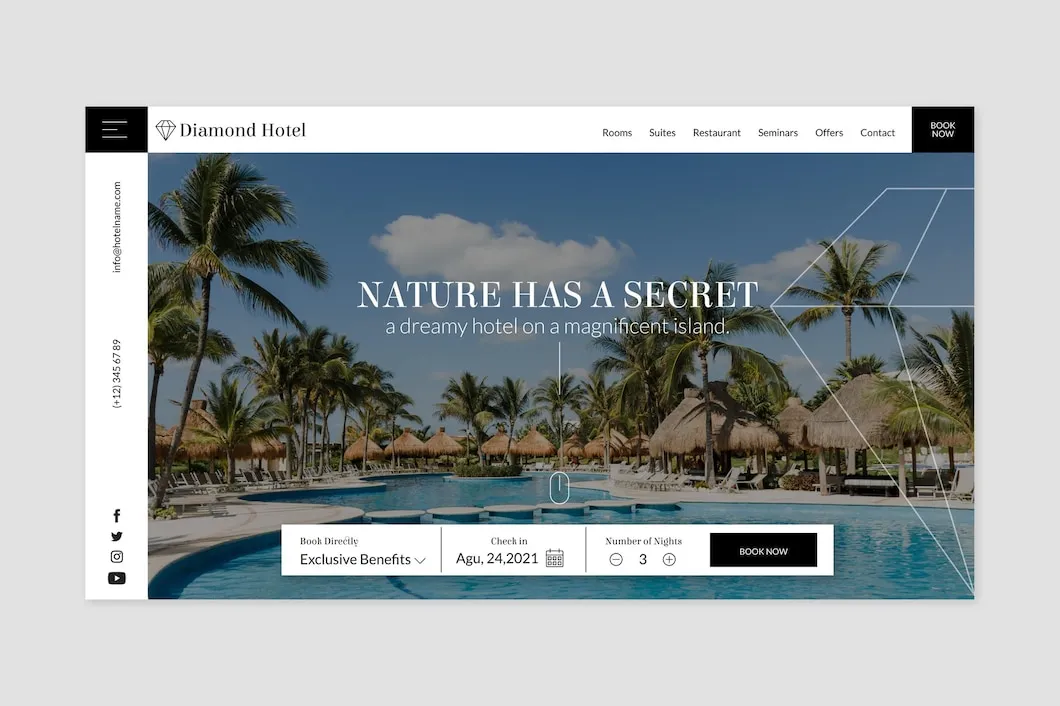
Design
Every hotel website needs a design that captures attention at first glance. Text arrangement, colour choices, and overall layout determine whether a visitor explores further or leaves. Because this has such a direct impact on bookings, it’s worth trusting the design to experienced hands rather than a template rushed into production.
Homepage
The homepage should summarise what the hotel offers, in language that works for every type of guest. This is the page that decides whether a visitor explores further, so it needs a clear logo, a short introduction to the property, its location, and the core services on offer. A weak first impression here sends visitors straight to the next tab.
Navigation menu
Beyond the homepage, guests should be able to move between facilities, contact information, and details about the hotel itself without hunting for a menu or guessing where a link leads.
Logo and tagline
A hotel’s logo signals what it stands for. Imagery, text, and colour choices all help position the property as luxury or budget-friendly. A distinct tagline reinforces that positioning, something like “Stay, Relax, Enjoy” sets an expectation before a guest reads another word.
Calls to action
Every piece of content, image, and video on the site should point toward a reservation. That might be a newsletter sign-up offering daily deals, a “Book Now” button that takes payment immediately, or a link to social pages for more proof. Place these consistently through the page, not just at the top.
Photography and videography
This is what turns visitors into guests. Well-lit photos and short videos of rooms, the property’s surroundings, and the night view let visitors picture themselves there before they book. That matters more in hospitality than almost any other industry.
7 Tips for Building a Better Hotel Website
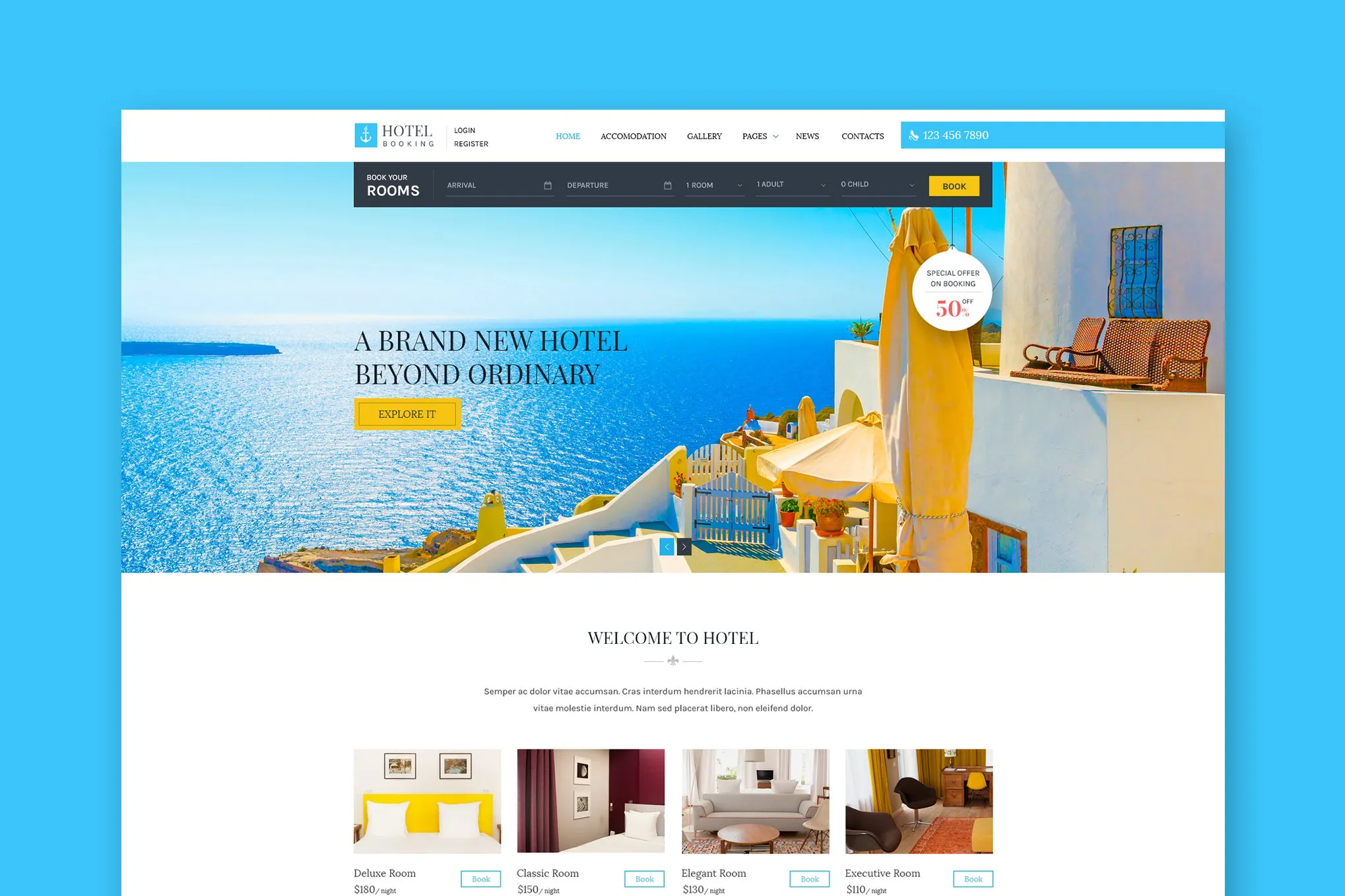
1. Design for your target guest
A 5-star property needs a website that looks and feels luxurious. A budget-friendly one needs to look approachable and value-focused instead. Colours, imagery, and wording should all match who you’re actually trying to book.
2. Invest in SEO
Listing your hotel where search engines can find it widens your reach well beyond referrals. That means clean base code, fast load times, and content genuinely built around what guests search for, not just what sounds good internally.
3. Write content that sells the stay
Your copy should be as memorable as your logo or photography, in plain language any guest can follow. Complex or overly formal wording confuses visitors, and confused visitors don’t book.
4. Use high-quality photos and video
Good copy alone won’t convert visitors, the imagery has to match it. Keep files properly sized so quality doesn’t come at the cost of load time. A beautiful photo that takes six seconds to load loses the guest before it finishes rendering.
5. Answer guest questions up front
Guests want to know your cheapest room rate, how to find the property, and what’s included: pool, restaurant, bar, airport pickup. Answer these directly on the site instead of making guests ask.
6. Collect and display reviews
Reviews give potential guests a clearer read on what to expect than your own copy ever can. Feature them prominently, and keep collecting new ones through email or social follow-ups.
7. Test with real users
Ask people outside the project for an honest opinion of the finished site: what’s confusing, what’s slow, what they’d change. It’s genuinely hard to judge your own site’s speed or clarity from the inside, and outside feedback catches what internal reviews miss.
Challenges in Hotel Web Design
Website speed
Speed is often the first thing that goes wrong, usually down to the choice of hosting provider or unoptimised media. Visitors give a new site well under a minute before moving to the next hotel option, so slow pages cost bookings directly.
Content creation
Staying visible means posting fresh content regularly, and many hotel managers simply run out of ideas for what to publish. Price updates, upcoming events at the property, or a behind-the-scenes look at housekeeping standards all work well and are easy to keep producing.
Domain selection
Finding a domain name that matches your brand can be harder than expected in a crowded hospitality market, where the obvious choice is often already taken.
Security
Security is a real and ongoing concern, since hackers actively target sites that process guest payments. Ongoing website maintenance and proper security configuration protect guest data and keep transactions trustworthy.

What It Costs
Hotel and hospitality websites follow the same pricing structure as other professional Nigerian websites: cost scales with functionality, not page count. A simple site with a contact form and gallery costs far less than one with a live booking engine, channel manager integration, or multi-property management. See our full web design cost in Nigeria breakdown for the details, and how it compares with a travel and tourism website if you operate in both spaces.
Frequently Asked Questions
How much does a hotel website cost in Nigeria?
Most hotel websites fall within the standard professional website range of ₦220,000 to ₦5,000,000+, with the booking system and channel integrations being the biggest cost drivers.
Does a hotel website need a built-in booking engine?
Not always at launch. Many properties start with a clear enquiry form and WhatsApp booking, then add a full booking engine once volume justifies the investment.
How many photos does a hotel website need?
Enough to cover every room type, the exterior, common areas, and any standout amenities. Guests are booking based almost entirely on what they can see, so thin galleries cost bookings.
Why is website speed so important for hotels?
Visitors typically give a new site under a minute before checking a competitor. Slow-loading photos and video are the most common cause, so image optimisation matters as much as the images themselves.
Conclusion
A hotel website plays a direct role in attracting guests and growing revenue, and every feature above exists to close the gap between browsing and booking. Need a professional, booking-ready hotel website? Send your project brief to info@webdesigns.ng or WhatsApp us on 08114900422.
Need a website that actually grows your business?
Web Design Nigeria builds fast, SEO-ready websites for Nigerian businesses. Let’s talk about yours.